Key takeaways
AI assistants may know a brand well without recommending its products when someone asks for advice.
Looking closely at the answers reveals the reasons for recommendations, recurring concerns and information worth checking.
AUGMA helps teams prioritise corrections and content improvements, then monitor how answers change.
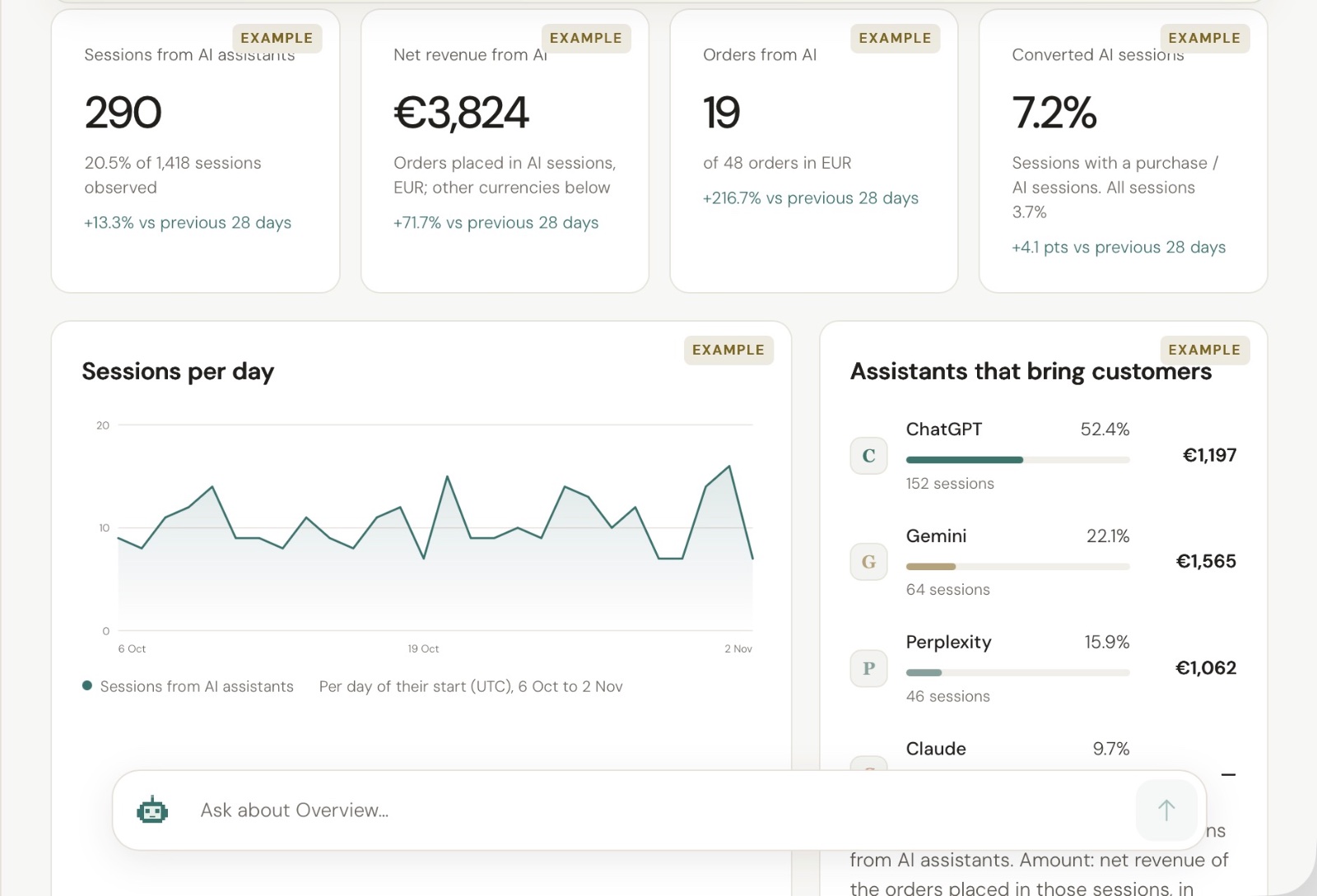
Commerce Impact helps teams examine visits and purchases associated with AI referrals, using data from connected analytics tools.
“Which bag would you recommend for work? It needs to fit a laptop and be comfortable to carry over the shoulder.”
For a luxury leather goods brand, this is a familiar customer question. Several bags may fit the brief. Whether an assistant recommends them—and gives accurate reasons for doing so—is another matter.
An assistant might know the brand’s history and name its most famous designs, yet overlook the bag best suited to the customer’s needs. It might also recommend the right model but give the dimensions of a different size or miss an important feature.
That leaves teams with practical questions. Is this an isolated answer? Does the same mistake appear elsewhere? What information needs to be clearer? Where should they start?
We developed AUGMA to help luxury brands investigate these questions and decide what to address and which team should take it forward.
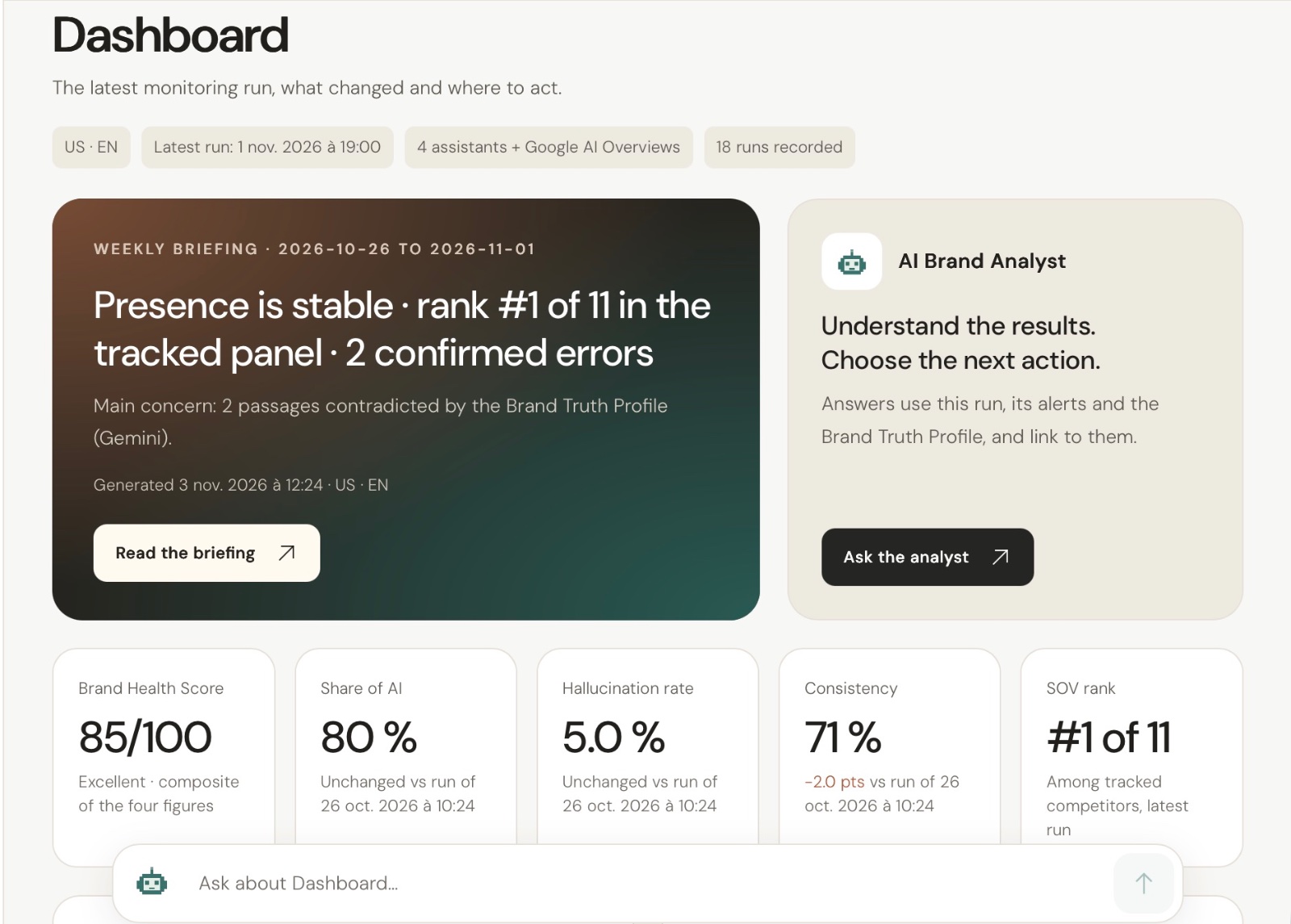
Start with a customer question
Before reviewing the results, decide what you want to learn.
A brand team may want to know whether assistants explain its craftsmanship accurately. An e-commerce team may be interested in recommendations for a particular occasion. A product team may want to check whether descriptions match the actual specifications.
Specific questions make the answers easier to assess:
“Which leather bag would you recommend for a 13-inch laptop? It needs a secure closure and should cost no more than €2,500.”
“What woody fragrance would make a good gift for someone who prefers subtle scents?”
“How do these two bags compare for everyday use?”
These examples address different needs. They help reveal which products are suggested, which criteria shape the answer and whether the brand is considered.
AUGMA’s visibility analyses provide an initial view. Reading the underlying answers helps teams understand the findings in more detail. The market, language, models and collection period all matter when interpreting the results.
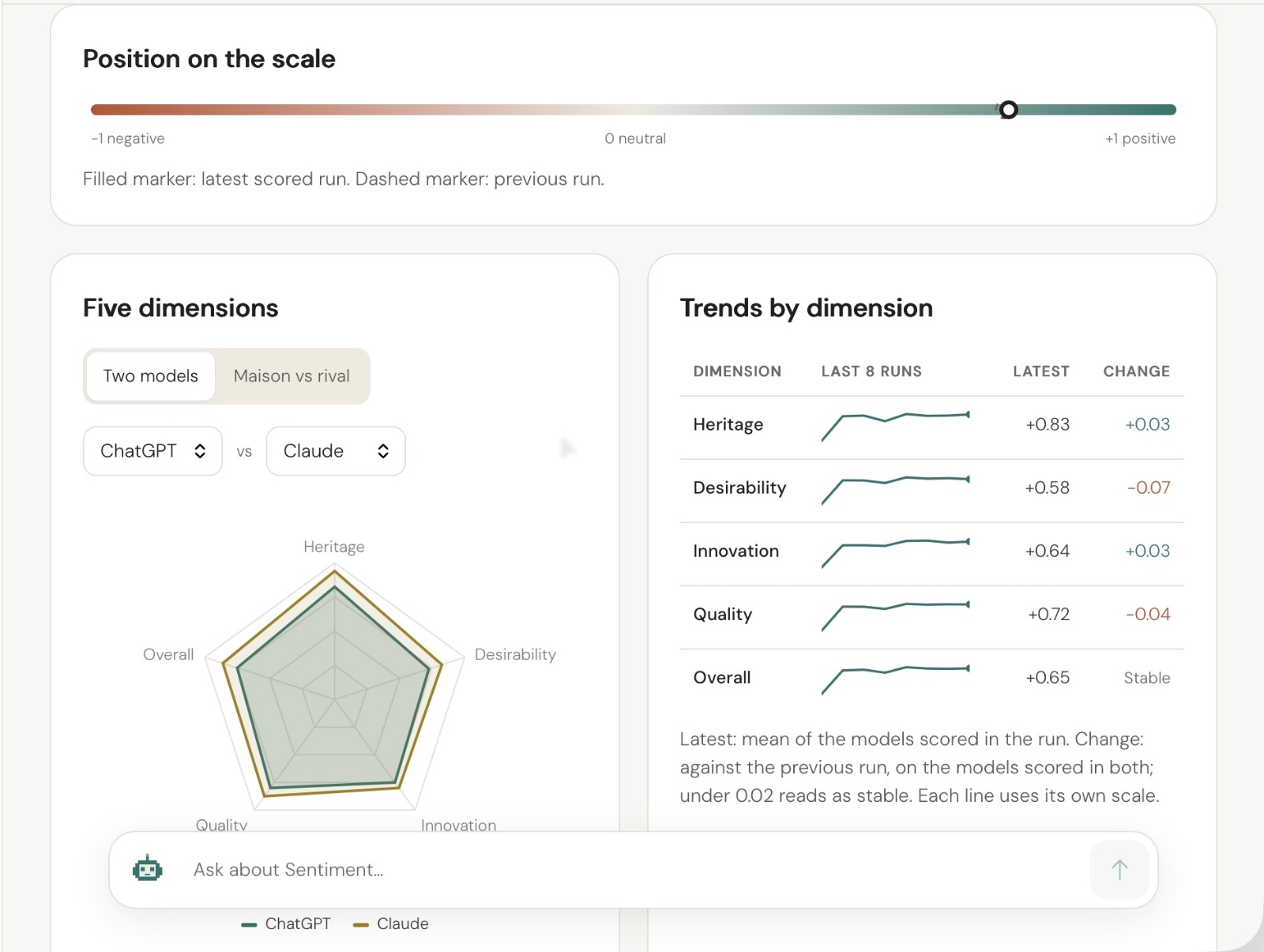
Sentiment: understand how the brand is described
A positive mention only tells part of the story. So does a criticism.
The Sentiment module helps teams examine what assistants praise or question about a brand, together with the reasons they give.
Consider an answer that calls a bag “expensive”. Is that something the brand needs to address? It depends.
Is the quoted price correct? Is it above the customer’s budget? Does the answer explain the materials and construction? Are the products being compared intended for similar uses?
The assessment may be reasonable. It may also rely on outdated information or an unsuitable comparison.
Each finding calls for a different response. An incorrect price needs correcting. Poorly explained craftsmanship may call for better content. A valid concern about weight or capacity deserves consideration, even if it makes the product less likely to be recommended.
Sentiment helps teams distinguish between these situations and identify recurring themes. Those findings can inform brand, communications, product and retail discussions.
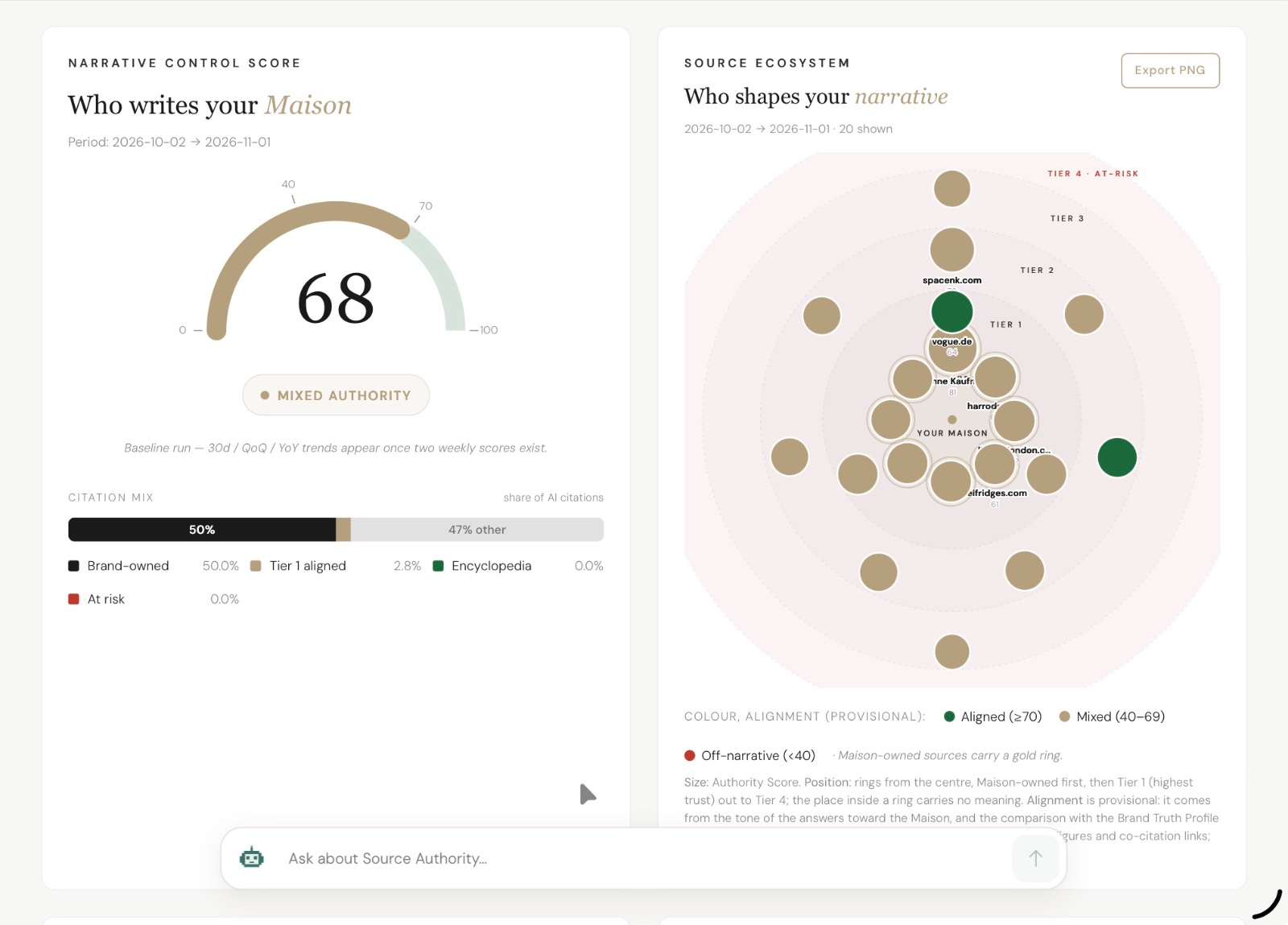
Understand which sources assistants cite
When an assistant describes a brand, which sources does it reference? The official website, a retailer, a magazine or another publication?
Knowing this helps teams understand the information customers may encounter. The brand’s own website might describe a product accurately, while a retailer still lists an older specification or an editorial feature focuses on a different aspect.
AUGMA’s Source Authority view brings these references together and shows the share of citations pointing to the brand’s own content. The source map helps teams identify the websites and publications worth reviewing.
Take a bag whose dimensions are being misreported. The team can inspect the sources cited in the relevant answers, compare the official product page with retailer listings and identify information that needs correcting.
The score and map help guide that review. They should be read alongside the actual citations and answers: a cited source does not reveal everything that contributed to a recommendation.
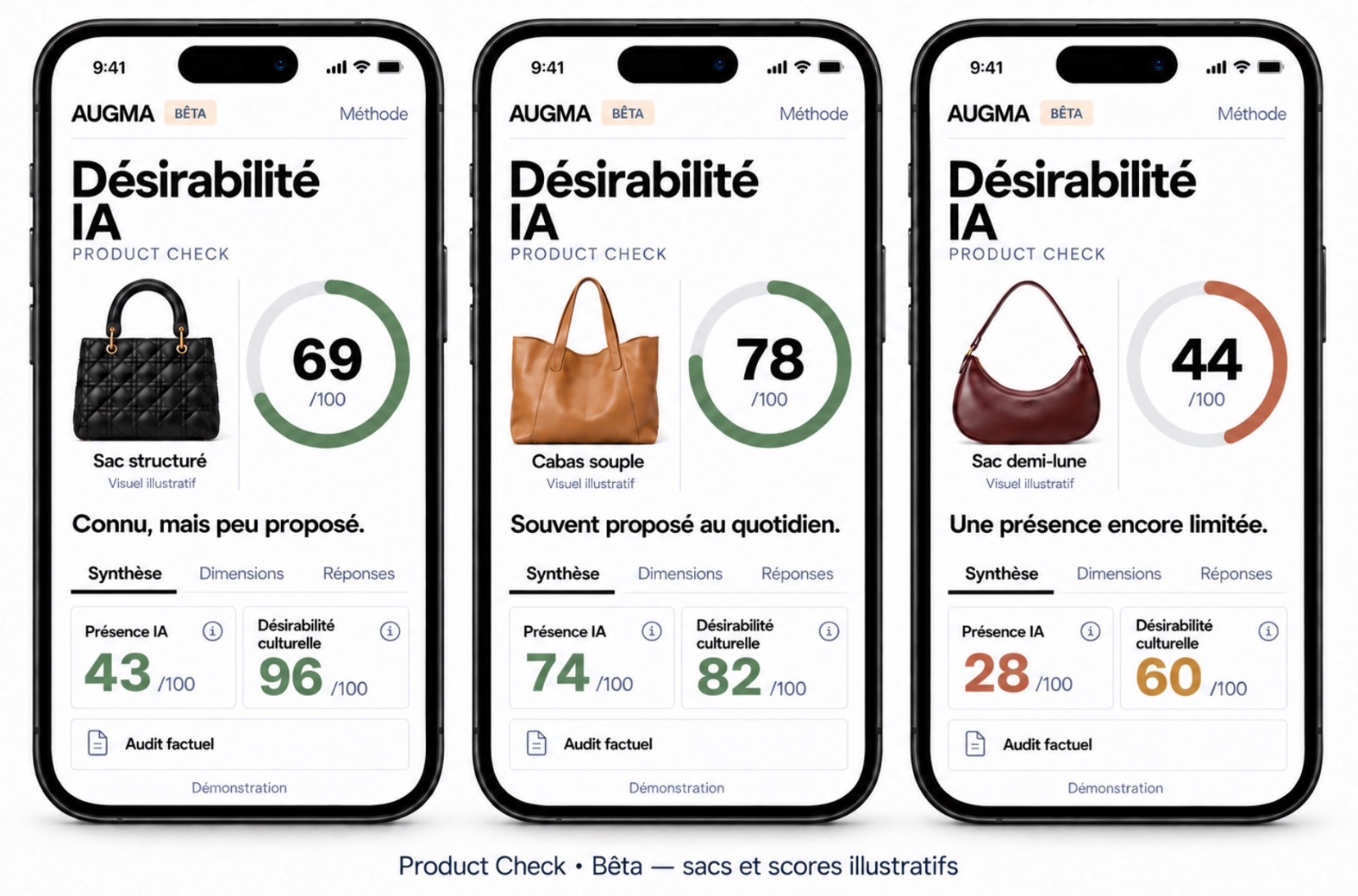
Product Check: take a closer look at one product
An analysis of the brand as a whole may overlook differences between individual products.
An established design may appear regularly in recommendations while a newer model is rarely mentioned. Two sizes of the same bag may be confused, despite serving different needs.
Product Check is designed to examine an individual product more closely: how it is described, the reasons given for recommending it and any apparent confusion.
The exact product matters. A different size, material or version can change whether a recommendation makes sense.
Product Check is available in beta through an application process, with access granted once a test request is accepted. The Desirability Index also operates at product level, using its own analytical framework. Results should only be compared once their scope and methodology have been checked.
Brand Analyst: explore a finding
Teams reviewing several analyses may need to investigate a recurring issue, understand a difference or prepare for a meeting.
Brand Analyst, AUGMA’s built-in assistant, supports that process. Useful questions start with something specific:
“Which concerns appear repeatedly in this analysis?”
“What reasons do the assistants give for recommending our brand?”
“What should we check before concluding that our visibility has improved?”
The aim is to explore a question using the data available in the tool. A summary can help focus the discussion, while the underlying answers and supporting evidence remain important to any decision.
Commerce Impact: examine what happens on the website
E-commerce teams will naturally ask how these findings relate to commercial activity.
Commerce Impact is designed to bring AUGMA’s analyses together with data available through GA4 or the AUGMA pixel. Its use depends on module activation, the relevant connections and the data actually collected.
Teams can then examine visits attributed to assistants, product views and available purchase data. Comparisons need to cover consistent periods, markets and products. GA4 and the pixel use different measurement methods, so their figures should not be added together.
Suppose a product appears more often in recommendations while its website views also increase. That is worth investigating. A campaign, a return to stock or seasonal demand could also account for the change.
Commerce Impact helps teams explore these relationships. Two measures moving together does not, by itself, show that recommendations caused the sales.
For a brand, the value lies in asking more informed questions. Which products deserve closer attention? Where is data missing? Which changes should the team monitor over time?
Decide what to do next
Reading a report is only the beginning.
If a bag’s dimensions are being misreported, the product team checks the specifications. The content team clarifies the differences between sizes. E-commerce reviews the relevant pages. Retail and customer service teams can add context from the questions customers ask them directly.
A regular review can focus on a manageable set of issues: errors to resolve, recurring reasons for recommending or ruling out a product, content changes and findings from subsequent analyses.
Recording when changes were made and keeping comparisons consistent helps the brand track developments without assuming that every shift resulted from its own actions.
AUGMA brings the answers, sources and changes over time into one place. Teams can investigate a recommendation, identify information that needs attention and agree what to do next. The Augmented Maison’s advisory support helps them set priorities and put those decisions into practice.
For a luxury brand, that means a clearer view of how its products are presented—and a practical way to improve the information customers encounter.